
I’ve spent years documenting local life across small European towns, and I’ve learned that the most important stories are often the ones a place tries to forget. This is one of them.
And here’s why it matters right now, in May 2026. As Launceston hosts the Australian Musical Theatre Festival (May 20-24, 2026) with its powerful production ‘Well Behaved Women’ – celebrating those who refused to stay silent – the city is also grappling with the end of an era. The AFL has just forced the Hawthorn Hawks out of Tasmania after 2027, a decision that has left local business and the council “extremely disappointed” . While the city looks to its future under the new Tasmania Devils, it’s a poignant reminder that the fight for identity and labour is never truly over.
History has a habit of echoing.
Was the convict system in Launceston really a form of slavery?
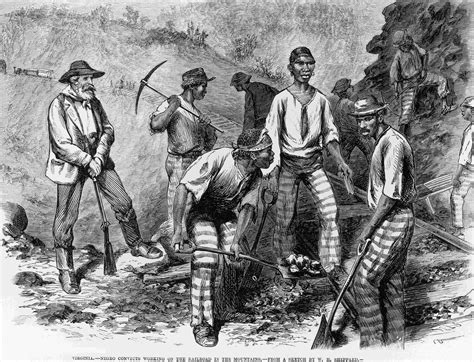
Snippet Trigger: Yes, the British Parliament’s own Molesworth Report of 1838 concluded that transportation to Van Diemen’s Land was “akin to slavery,” creating a “publicly owned slave labour force” where convicts were assigned to private masters with no wages or rights.
The evidence is damning. Between 1803 and 1853, over 70,000 convicts were sent to the colony that would become Tasmania . Unlike prisoners today, these men, women, and even children had no release date. Their “sentence” was a commodity.
William Hill, an officer on the Second Fleet, wrote something that still chills me: “the slave traffic is merciful compared with what I have seen in this fleet” . Think about that for a second. A man who witnessed the transatlantic slave trade said our system was worse.
The assignment system was the mechanism. It basically turned convicts into leased property for free settlers. You wanted cheap labour for your farm? You applied for a convict. The colonial government handed them over, and in return, you fed and housed them – no wages needed.
It was a lottery. Your treatment depended entirely on the “temper and disposition of the settler” . One master might be decent. Another might work you to death in chain gangs. The Molesworth Report found this system was dysfunctional, open to abuse, and morally corrupting for everyone involved .
So yes. Legally, they were “prisoners.” Practically, they were slaves with a different label.
What was life like for women convicts at the Launceston Female Factory?
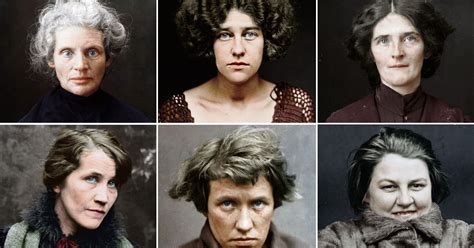
Snippet Trigger: The Launceston Female Factory, opened in 1834, was a brutal workhouse designed to house 80-100 women but often crammed in over 250, forcing them into hard labour as laundresses and seamstresses in “slave-like conditions” .
I spent a morning reading the transcripts from the 1841 inquiry into female prison discipline. The language is dry, bureaucratic. But between the lines, you see the misery.
The Launceston Female Factory was the first purpose-built institution for convict women in Van Diemen’s Land . It wasn’t a factory in the industrial sense. It was a prison, a hiring depot, a nursery, and a hospital all rolled into one . By 1842, overcrowding was so severe that more than 320 women and children were packed into buildings meant for a fraction of that number .
The women were divided into three classes. The “Assignable Class” waited to be chosen as unpaid domestic servants. The “Probation Class” did lighter tasks. And the “Crime Class” – for those who talked back or got drunk – faced the harshest punishments .
Riots weren’t uncommon. Women smuggled themselves out at night to roam the town, known as the “Flash Mob” . And the children? Many were born inside those walls, and many died there. The cold, the damp, the disease – it was a machine designed to break people.
Historian Dianne Snowden described it simply: “It would have been a dreadful life, cold and bleak and miserable” . I don’t think we need to add much more to that.
How did Aboriginal people experience slavery in and around Launceston?
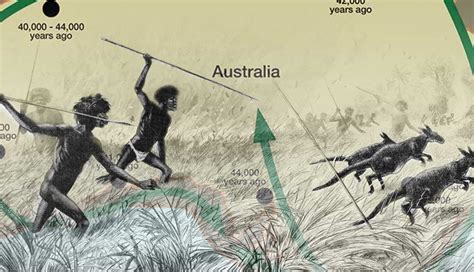
Snippet Trigger: Beyond the convict system, Tasmanian Aboriginal people – particularly women – were kidnapped, enslaved, and traded as “tyereelore” (island wives) by sealers, often traded for four seal skins or forced into sexual servitude.
This is where the narrative gets even darker. Because while the convicts were victims of the British Empire, the Aboriginal people were victims of its expansion.
The sealers who operated in the Bass Strait were a rough bunch – ex-convicts, sailors, whalers. They began plundering seal populations in 1798, but they soon realised the islands were also inhabited . So they started kidnapping Palawa women. These women, known as Tyereelore or “island wives,” were taken as sexual partners, used for free labour, and traded amongst the sealers .
One woman, Tanganutara, was kidnapped as a young girl and sold for four seal skins . Another, Wauba Debar, was enslaved as a teenager, yet later became famous for rescuing her captors from a shipwreck . Her grave in Bicheno stands as a bizarre monument to both cruelty and compassion .
The most famous case is Truganini, often called the last full-blood Tasmanian Aboriginal. She saw her mother stabbed to death, her sisters kidnapped into slavery, and her betrothed murdered . She was then forced into sexual slavery by sealers .
Even in the 2020s, former Prime Minister Morrison’s denial of this history was a painful reminder of how these stories are still being buried. But as of May 2026, the conversation is shifting. You can’t walk into a museum in Launceston without seeing these names now.
That’s progress. Slow, painful, but real.
When did the transition from assignment to probation happen, and why?
Snippet Trigger: The shift from the assignment system to the probation system began in 1840 after the Molesworth Report condemned assignment as akin to slavery; male convicts were sent to government-run stations, while women faced six months on the hulk ‘Anson’.
The British government finally listened – sort of. In 1837, they set up a Select Committee chaired by William Molesworth. Their report, published in 1838, was a bombshell. It said the assignment system was a failure, open to abuse, and – crucially – it was turning the colony into a “slave colony” .
So they changed the rules. After July 1, 1840, “the assignment of convicts in Hobart Town and Launceston shall wholly cease” for men . Instead, male convicts went into a probation system. They lived in government-run stations, building roads and infrastructure under strict supervision .
But here’s the hypocrisy: the regulations specifically exempted female convicts . Women were still assigned directly to private service. They were considered less dangerous, more controllable. It’s a stark reminder that patriarchy and slavery were two sides of the same colonial coin.
From 1843 to 1849, newly arrived women were housed on a converted naval hulk called the Anson in Hobart Harbour. They spent six months there, supposedly being “trained” to be good servants, before being assigned out . It was a revolving door of unfree labour.
The table below shows the key differences:
| Feature | Assignment System (Pre-1840) | Probation System (Post-1840) | Control | Leased to private masters | Held in government stations | Labour | Varied (domestic, farm, chain gangs) | Infrastructure (roads, quarries) | Duration | Immediate after arrival | Period of “probation” first | Women | Assigned directly | 6 months on Anson hulk, then assigned |
|---|
Does modern slavery still exist in Launceston in 2026?
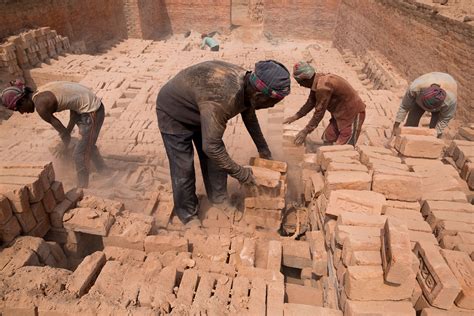
Snippet Trigger: Yes. In 2019, a Launceston pair was charged with trafficking a woman into Australia and possessing a slave in a forced marriage case; as of March 2026, those charges were dropped by Commonwealth prosecutors, highlighting ongoing challenges.
You might think this is all ancient history. You’d be wrong.
In July 2019, a 43-year-old woman and 52-year-old man from Launceston were arrested. The Australian Federal Police alleged they had deceived a woman into coming to Australia and held her as a slave between October 2018 and February 2019 . The details were grim: forced marriage, no freedom, no escape.
But here’s the kicker. In March 2026 – just two months ago – Commonwealth prosecutors dropped the charges. A middle-aged Launceston pair was discharged from human trafficking and slavery charges . The reasons remain unclear. The case just… disappeared.
This matters because it shows that the systems of control and exploitation haven’t vanished. They’ve just changed shape. Human trafficking, forced labour, and sexual exploitation are still underreported and growing, not just in Australia but globally .
As we sit here in May 2026, with the city buzzing over the Australian Musical Theatre Festival and the Tasmania Devils gearing up for their 2028 debut, it’s easy to get distracted. But the quiet stories of exploitation continue beneath the surface. The 2026 Keep Australia Beautiful Tidy Towns Awards were held in Launceston last week, celebrating the Huon Valley . It’s a lovely event. But it doesn’t change the fact that we still have work to do on basic human rights.
I’m not drawing easy parallels. But I am saying that the “slave labour” mentality – of treating people as disposable, controllable assets – didn’t end with the last convict ship in 1853. It evolved.
What is the link between Launceston’s slave history and the Blackbirding trade?
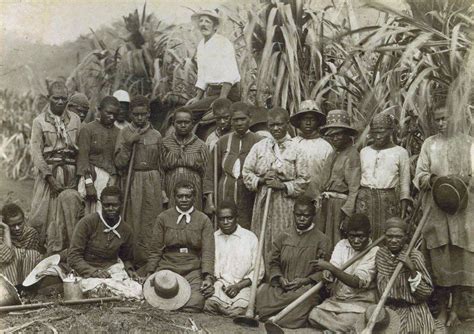
Snippet Trigger: While Launceston itself wasn’t a major hub, Tasmania’s sailors and ships were involved in blackbirding – the kidnapping of Pacific Islanders for slave labour in Queensland’s sugar cane fields – from the 1860s onwards.
It’s a lesser-known chapter, but it connects. Blackbirding was the colloquial term for the South Pacific labour trade. Between the 1860s and early 1900s, thousands of Pacific Islanders – Kanakas – were kidnapped or tricked onto ships and forced to work on plantations in Australia .
Tasmanian sailors and vessels were part of this network. Records show that the ship Maffra, which operated out of Tasmania, was engaged in “blackbirding” – bringing men and women from the Pacific Islands to work as virtual slave labour in the cane fields .
It’s a stark reminder that the slave economy wasn’t confined to convicts or Aboriginal people. It was a system of racialised exploitation that spanned the Pacific. And the profits flowed back to ports like Launceston.
Senate debates in Australia as recent as November 2023 have acknowledged that there are still unmarked graves of slaves from that era being uncovered today . The past is never really past.
How is Launceston’s 2026 cultural scene reflecting or confronting this history?

Snippet Trigger: The 2026 Australian Musical Theatre Festival (May 20-24) features ‘Well Behaved Women’, a musical celebrating trailblazing women who refused to stay silent, directly echoing the untold stories of convict women and Aboriginal Tyereelore.
Art has a way of holding up a mirror. And in May 2026, Launceston’s cultural calendar is doing exactly that.
The Australian Musical Theatre Festival is taking over the newly refurbished Albert Hall from May 20-24 . The headline production is ‘Well Behaved Women’, an Australian musical by Carmel Dean celebrating trailblazing women who refused to stay silent .
You don’t have to look hard to see the parallel. The convict women of the Launceston Female Factory – the “Flash Mob” who slipped out at night, the mothers who died giving birth in cold yards, the women who rioted against their conditions – they were the original “badly behaved” women.
And then there’s the story of Lucy Beeton. Born in 1829 on a Bass Strait island to an Aboriginal mother and a former convict sealer father, she was educated in Launceston and became a powerful advocate for her people . She lobbied the government for land rights and fought for compensation .
Her story is the flipside of the tragedy: resilience. She didn’t just survive the system; she fought it.
At the same time, the city is processing the AFL’s decision to force Hawthorn out of Tasmania after 2027. The Hawks have played in Launceston since 2001, bringing in millions of dollars in economic activity. But the new Tasmania Devils argued they needed exclusive access to the north, and the AFL agreed . Launceston Mayor Matthew Garwood said the council was willing to step in and fund Hawthorn games, but the AFL has declared it won’t fixture the Hawks in Tasmania after 2027 .
It’s a debate about money, identity, and who gets to call this place home. But it’s also a reminder that the fight for resources and recognition – so central to the story of convict and Aboriginal labour – never really ends.
What can we learn from Launceston’s slave history for the future of work in 2026?
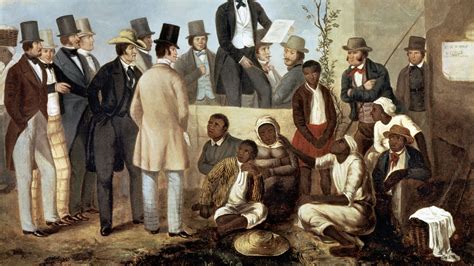
Snippet Trigger: The history of slave labour in Launceston – from convict assignment to Aboriginal servitude to modern trafficking – teaches us that exploitation thrives when labour is treated as a commodity without rights or bargaining power.
I’m not a politician. I’m a storyteller. But I’ve seen enough small towns rise and fall to know that the way we treat our most vulnerable workers is the canary in the coal mine for the whole economy.
Launceston in 2026 is a city in transition. The tourism dollars from the new Albert Hall and the Devils’ AFL ambitions are real. The $12 million government commitment to the new team and the $20 million refurbishment of the Albert Hall are signs of growth . But growth doesn’t automatically mean fairness.
The convicts had no wages. The Aboriginal Tyereelore had no rights. The modern trafficking victims often have no papers. The common thread? They were all invisible to the law until something went wrong.
So here’s my prediction for the second half of 2026: as automation and AI begin to displace traditional jobs in Tasmania’s agricultural and service sectors, the debate over “essential workers” and “gig economy” rights is going to get louder. We’ll see more pressure to classify workers as independent contractors, stripping them of benefits and protections.
Will we learn from the past? Or will we invent new forms of assignment and probation?
Honest storytelling means asking the hard questions. Not answering them neatly. The ghosts of the Launceston Female Factory and the Tyereelore of the Bass Strait aren’t just history. They’re warnings. And as the city dances to Broadway showstoppers at the Albert Hall this May, I hope someone is listening.
Because the beat goes on. It always does.
]]>